
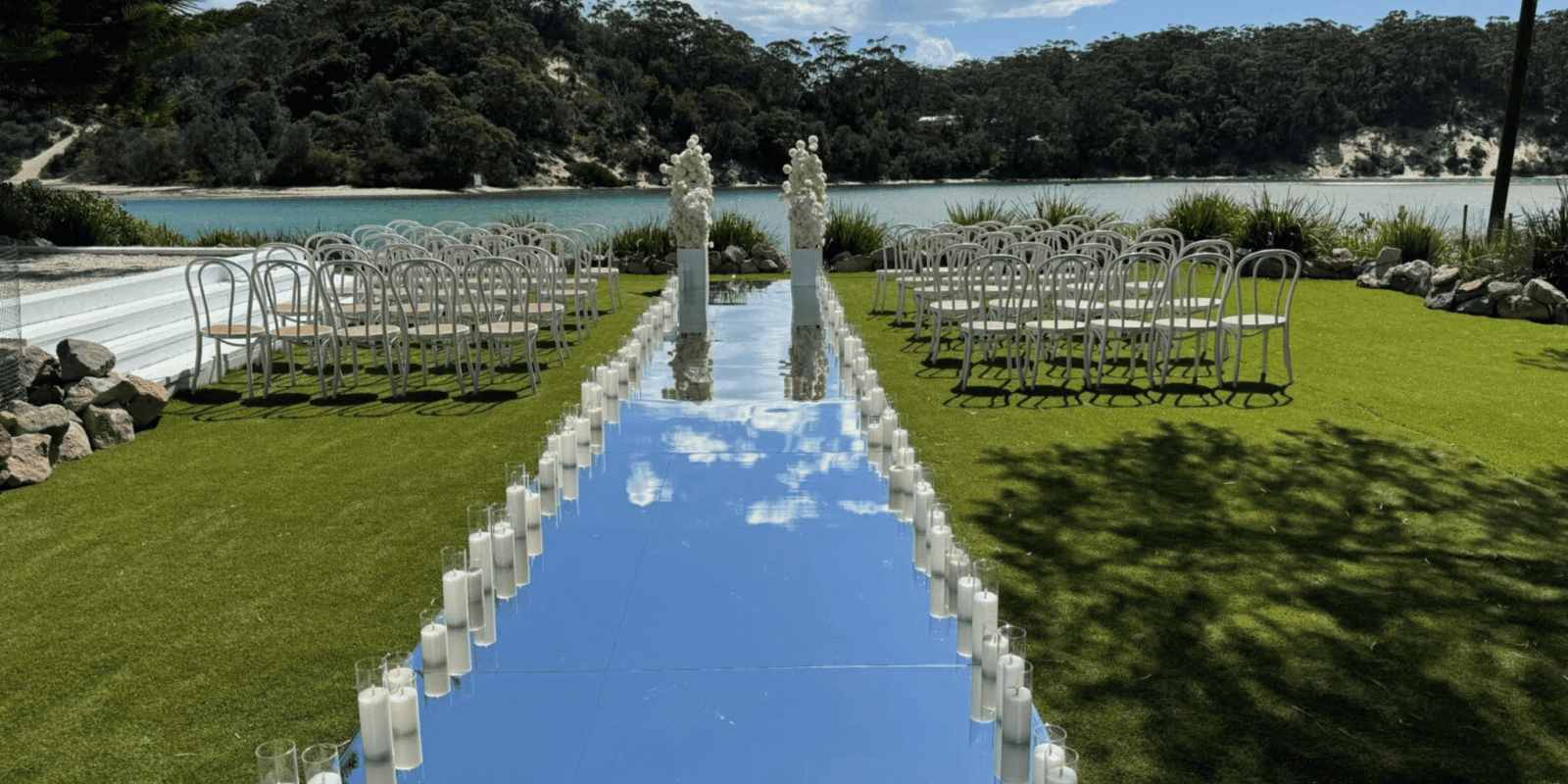
Elegance usually lives in the details rather than the big gestures. A thoughtfully designed wedding aisle walkway, paired with balanced wedding stage decoration, can turn an entrance into something that feels complete instead of overdone.
That matters more than people expect, because the entrance is one of the very first things guests actually experience. It’s not only about how the décor looks sitting still- it’s about how the space holds up once people are moving through it.
The aisle walkway tends to become the natural guide for that moment. When it lines up well with the stage setup, everything reads as connected without needing extra styling layered on top. Often, it’s the small layout decisions- not the showpieces- that end up shaping the first impression the most.
An entrance feels memorable when it isn’t overloaded but still has a clear sense of direction. Guests should know, almost instinctively, where to walk and where to look- without anyone needing to explain it.
The aisle walkway is usually the first structured visual element guests encounter. It sets direction quietly, while everything around it supports that movement rather than competing with it. Balanced against the right wedding stage decoration, the whole entrance can feel finished without feeling heavy.
It’s less about adding more, and more about how well what’s already there is arranged.
The classic approach: a full floral or petal-based path rather than just lining the edges. Layered florals soften the entire walkway, which works particularly well for romantic or traditional weddings where texture carries more weight than structure does.
A reflective surface adds depth and a noticeably more contemporary feel. This style tends to show up most in indoor venues, where lighting can be controlled precisely enough to actually catch the reflection.
Fabric softens the edges here or drapes the walkway entirely. It introduces a sense of movement- especially outdoors, where a breeze gives the fabric some natural motion the design alone couldn’t create.
Candles along the sides bring warmth and symmetry, and tend to suit evening ceremonies particularly well- here, the lighting isn’t just functional, it becomes part of the atmosphere itself.
Printed patterns, monograms, or cultural motifs along the surface turn the walkway into something closer to storytelling than a simple path from A to B.
A structured, pared-back approach- clean edges, balanced spacing, no visual clutter. This style tends to let the venue’s own architecture do more of the talking.
The stage is where the walkway’s visual journey actually lands. The aisle directs movement, but the stage is the destination- and if the two don’t speak the same visual language, the mismatch shows. A floral walkway leading into a stripped-back, minimal stage can feel oddly disconnected, even when each element looks great on its own.
This is where coordination matters more than how much is on display. Pristine Dance Floors often works specifically on aligning these two elements, so the shift from entrance to stage feels like one continuous idea rather than two separate decisions.
There’s no strict rulebook here- it’s mostly about visual consistency.
Whatever the theme, the walkway shouldn’t feel bolted onto the venue. It should read as part of the same overall story as everything else- including the stage decoration at the other end of it.
Even the best design ideas depend on whether they can actually be executed well in a real venue. Worth checking ahead of time:
A design only works if it can function smoothly in the specific space it’s being placed into- not just in the mockup.
A walkway that suits a winter indoor reception won’t necessarily hold up the same way outdoors in summer. Season, venue type, and surface all quietly shape how a design needs to adapt- without changing the creative direction itself.
Condition | What to Consider |
Summer / outdoor heat | Florals wilt faster; fresh arrangements need the same-day setup |
Humid or coastal climates | Fabric drapes differently; some materials hold shape better than others |
Heritage or ornately floored venues | Walkway design should complement existing flooring, not compete with it |
Modern or blank-canvas venues | More freedom to make the walkway itself the visual statement |
Outdoor ground surfaces | May need a stable base layer before any decorative finish goes down |
The goal stays the same either way- it’s the execution that adjusts to fit the day and the room.
Pristine Dance Floors takes design ideas and turns them into setups that actually hold up in real venues- including aligning walkway layouts with stage positioning so the whole entrance feels like one cohesive space rather than two separate projects.
Our work generally covers custom walkway design execution, coordinating walkway and stage layouts together, adjusting the setup to fit the venue’s actual structure, and making sure the final installation is clean and stable. The aim isn’t just a good-looking design on paper- it’s making sure that design survives contact with the actual event day.
No single element defines a wedding entrance on its own. It’s the combination- movement, structure, visual balance- that creates the impression guests actually walk away with.
A well-planned aisle walkway guides that experience; the stage decoration completes it.
Get both aligned, and the wedding aisle walkway feels intentional without ever feeling overdesigned. In the end, what matters isn’t how many elements are involved, but how naturally they come together once people are actually standing in the space.
Floral and fabric-based walkways are the most popular (mostly because they’re versatile enough to suit almost any theme while still looking effortlessly elegant).
Yes- most designs can be adapted to match your couple’s theme, venue, and personal style.
Lighting brings out texture and reflection in your materials and plays a big part in how visible and atmospheric the walkway feels- especially in the evening.
Ideally, yes. Keeping the two visually connected helps the whole entrance feel like one cohesive design rather than two separate setups.
Recommended. Professionals help ensure your walkway stays stable, properly aligned, and finished cleanly on the day.
WhatsApp us